CONTACTS: +254 726879488 (Mobile)
+254770 455 116 (Office)


By Steve Umidha
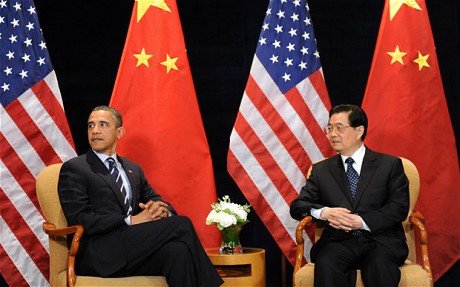
Kenya is quietly becoming the center of a struggle for influence between what are arguably the world’s super -power economies; United States and China. But it’s the former that is causing jitters to the latter.
The relationship between the US and Kenya for instance has deepened over the last one year and the recent visit by the US President Barrack Obama in July, is further expected to boost trade ties between the two countries which has existed since independence.
His trip saw the two nations sign trade agreements to bolster Kenya with Sh1.2trillion- with the bulk of the money expected to fund large scale development projects, including Sh900billion which was set aside for the construction of Lamu Port South Sudan and Ethiopia Transport Corridor (LAPSSET).
According to figures from Kenya National Bureau of Standards (KNBS), US exports to Kenya rose to Sh168billion last year compared to the Sh146billion worth of goods and services that came from Africa alone – indicating the county has for the first time in decades bought more goods from the United States in a single year than it did from the whole of Africa.
There is no overstating the stakes, given the abundant of natural resources Kenya has to sustain her needs including Oil and gas as well as renewable energy and improved market liberalization policies that are attracting foreign investments into the country.
Yet in a deep and troubling sense, the US is trailing China, whose economic ties in Kenya are deep despite Chinese now beginning to sense nuisance from the West.
Last week China’s move to host a two-day seminar in Nairobi to act as a precursor for the upcoming sixth Forum on China-Africa Cooperation (FOCAC) in December in South Africa is a clear testament that the second largest economy in the world is feeling the threat.
The summit first of its kind to be held on African continent is scheduled to take place in Johannesburg on 4 and 5 and is expected to have great significance for boosting comprehensive transformation and upgrading of China relations with African countries which is starting to be weaken.
“The focus is on cooperation and we will be looking at other areas of interest to boost trade ties between us.
“The summit will also provide a historical opportunity to further strengthen mutually beneficial cooperation in five prioritized areas including industrialization, agricultural modernization, health, people-to-people exchanges and peace and security,”said Chinese Ambassador to Kenya Liu Xianfa during the seminar.
Trade volume between China and Africa has increased from $10 billion in 2000 to $220 billion in 2014, while its share in Africa’s total foreign trade has also increased from 3.8 percent to 20.5 percent.
Despite Chinese dominance which continues to be felt in the local market, every detail points towards China enjoying the moment while it still lasts and now other economies such as the US and Japan for instance are gradually starting to ‘interfere’.
To its credit, US government has in the recent years taken steps to rectify trade imbalance between Obama’ administration and Kenya and the world’s largest donor has an opportunity to establish deeper and long-lasting relationships in the country than those of China – whose motives for making massive investments in the country and the rest of the continent have been harshly questioned.
Economic analysts have in the past said China is seeking short-term economic gains compared to the US which is poised to be a meaningful partner in Kenya and the rest of Africa, and is expected to provide mixes of economic investment with an entirely American agenda.
Other concerns that have been raised are the persistent imports of low quality and counterfeit goods believed to be originating from China as well as the rampant ivory trade whose biggest consumers are said to be China and other Asian nations.
These factors among others are slowly damaging China’s reputation and could in the longer term sock its relationship with Kenya and other neighboring economies who have expressed similar disquiet.
China will have to regroup and strategize on how it’s going to win back confidence of many African nations that are looking to the West to fund their projects and help build their economies.
You cannot copy content of this page